Alberto Caprioli, composer, conductor, Italian
Scroll down for musical and biographical links
INTERMEDIO I for Amplified Flute and Magnetic Tape Processed with the 4i Processor (1989)
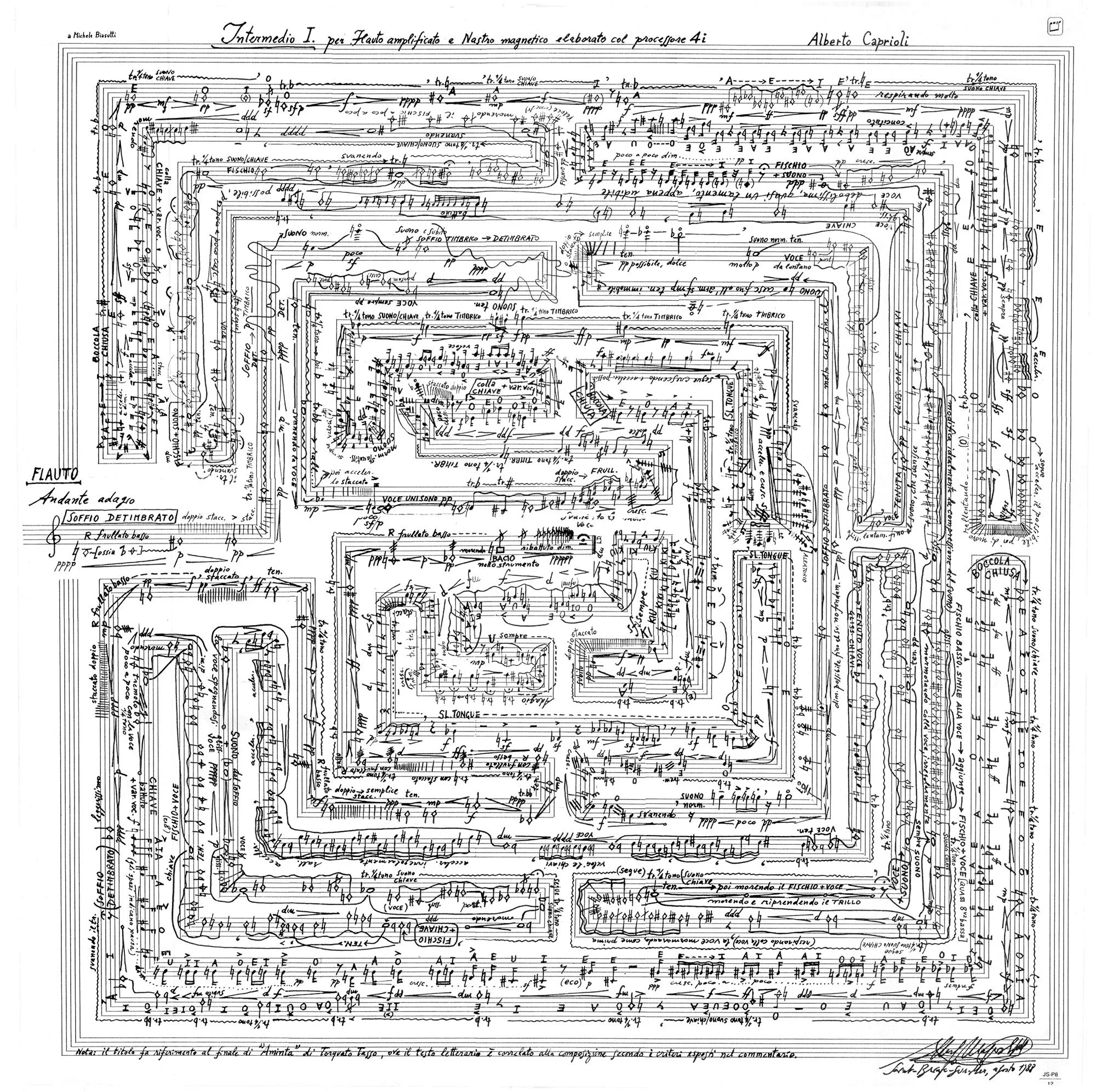
Intermedio I is the second composition by Alberto Caprioli at the Center for Computational Sonology (CSC) at the University of Padua. For the magnetic tape component, Caprioli used the 4i processor, created by Giuseppe Di Giugno at IRCAM in Paris and donated to the CSC, Italy’s premier center for computer music.
The form of the piece, both musical and graphic, is derived from the distinct architectural structure of the labyrinth at Chartres Cathedral, converted from a circular to a square layout. The vowels and consonants vocalized into the instrument by the flutist are drawn from one of the Intermedi of Torquato Tasso's pastoral drama Aminta. The work is characterized by the continuous application of avant-garde flute techniques, such as hissing and singing into the instrument, pitched whistling into the embouchure hole combined simultaneously with traditionally keyed notes, and a concluding technique involving a kiss upon the instrument’s embouchure
This work has since been performed extensively across Italy, Austria, France, and Russia…
https://www.youtube.com/watch?v=psUHPh1BcK4
Observations
Composer Alberto Caprioli describes the format of The Intermedio l as “derived from the distinct architectural structures of the labyrinth at Chartres Cathedral, converted from a circular to a square layout.”
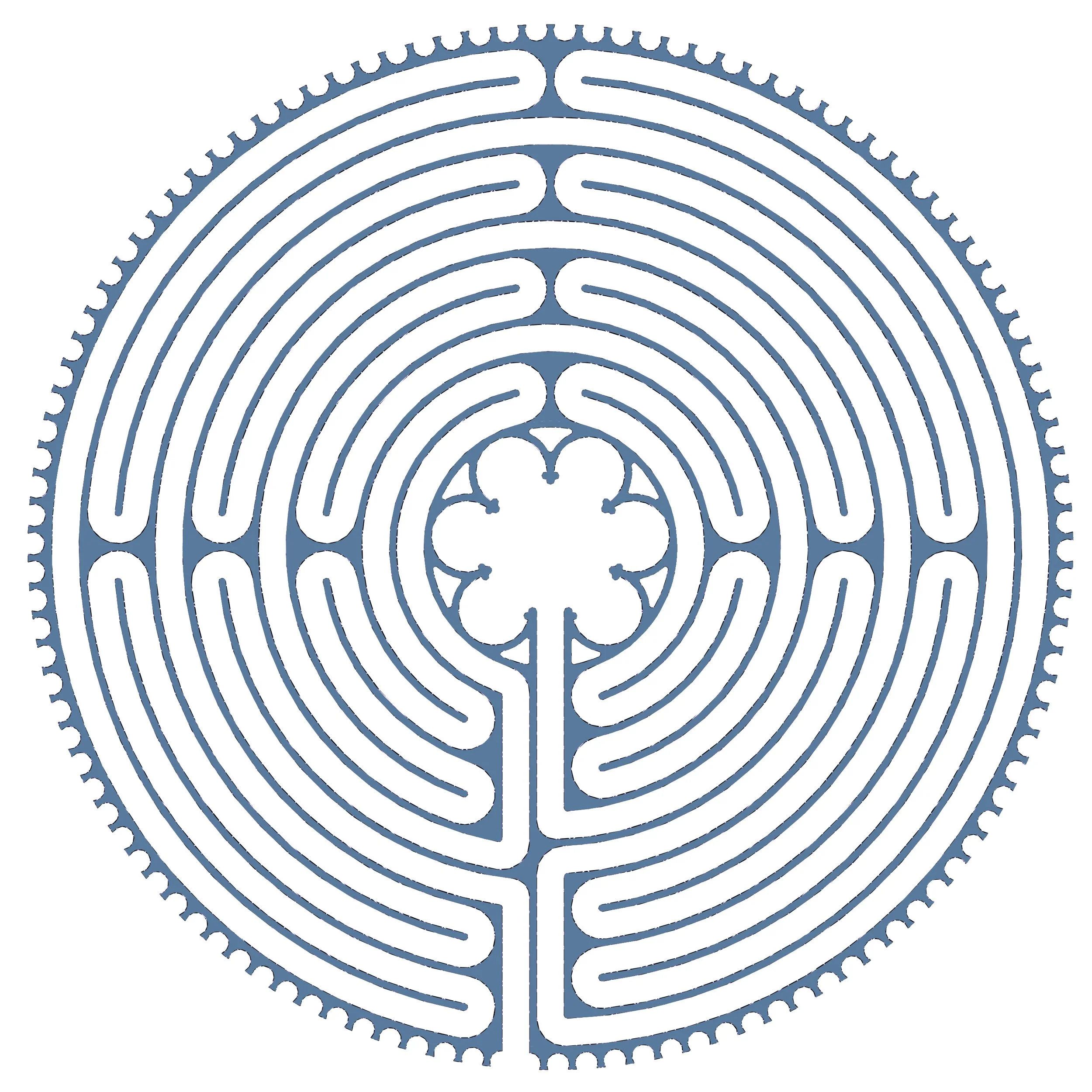
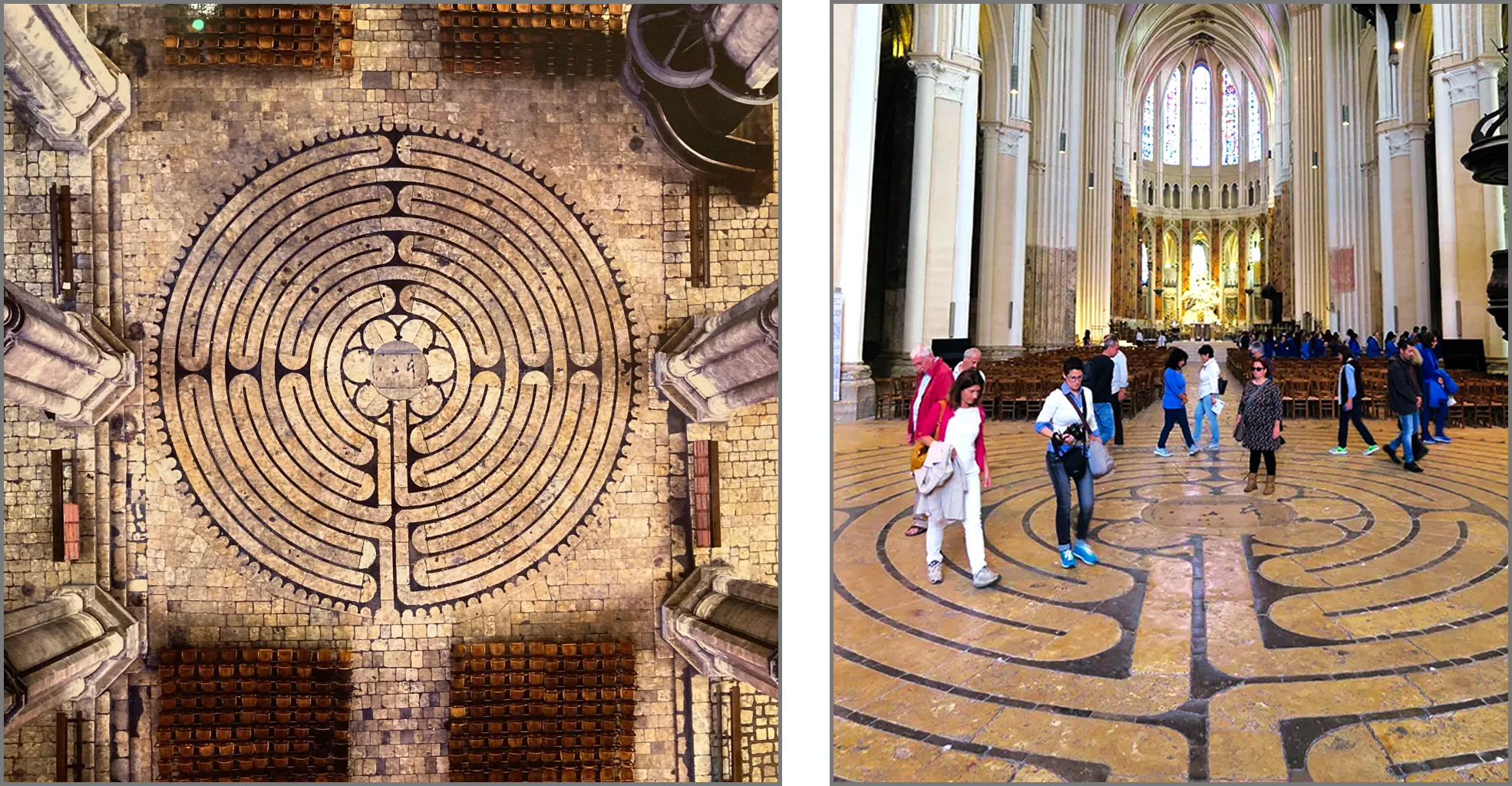
The Chartres Cathedral, built in France in the 13th century, contains this famous labyrinth which consists of a blue-black stone ring set into a continuous white path running inside the ring. Unlike a maze which contains wrong turns, false paths, dead ends, and cumulative emotional challenges, the Chartres labyrinth contains none of these. Here, one begins the contemplative and devotional journey at the Western Royal Portal reaching the culmination inside the “Central Circle”. The exercise of quietly following the white stone path encourages an interior journey as well so that when one reaches the innermost circle, one is perhaps more uplifted and enlightened.
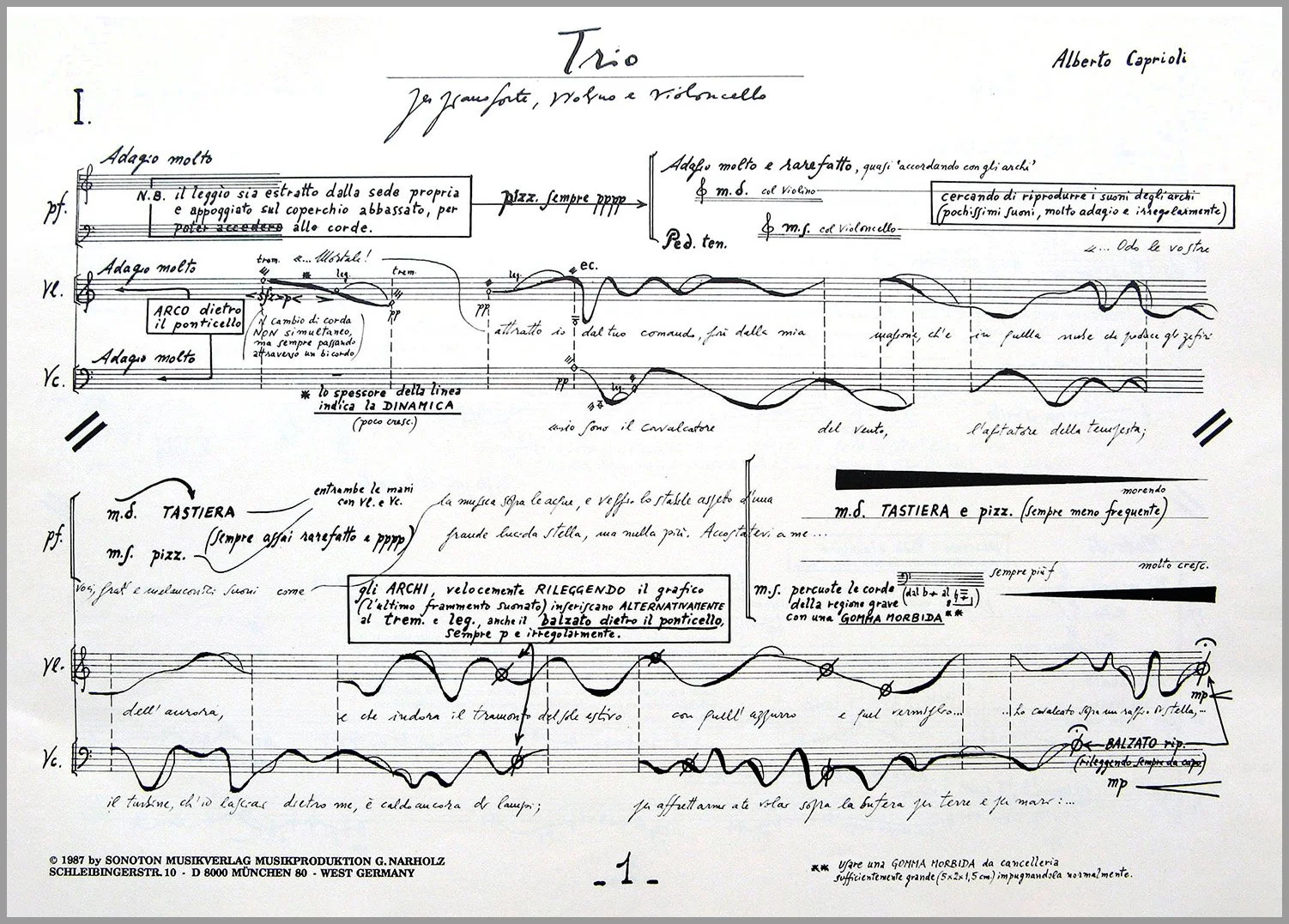
TRIO for Piano, Violin, and Cello (1984)
TRIO combines graphic and traditional notation, extended instrumental techniques, whispered vocalizations and soft whistling, fragmentary texts from Robert Schumann’s 1829 Italian letter, and a concluding madrigalism depicting the setting sun in homage to Carlo Gesualdo da Venosa.
Learn More
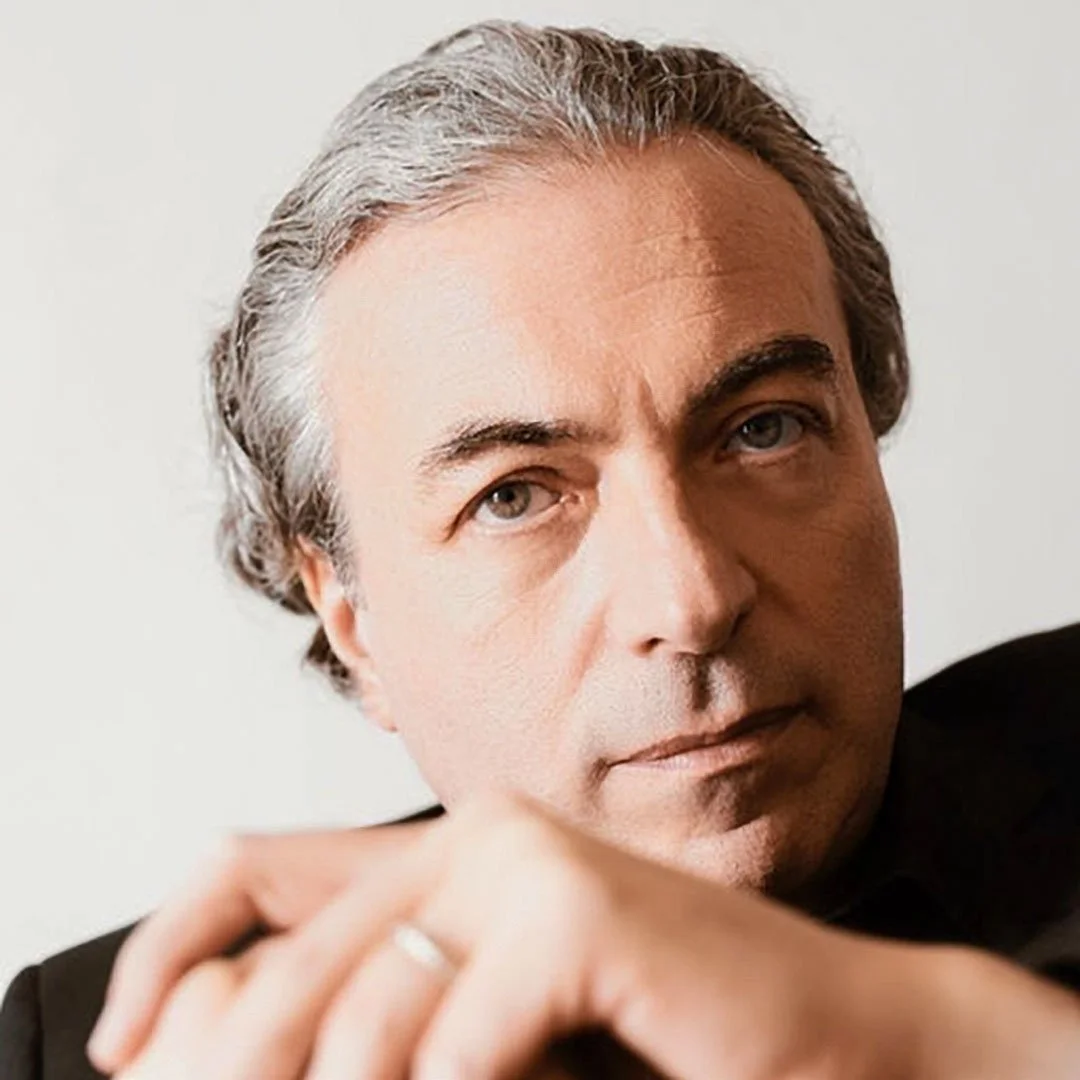
Alberto Caprioli
Alberto Caprioli – Intermedio I
Alberto Caprioli – TRIO