BIOGRAPHY
Jane Austen
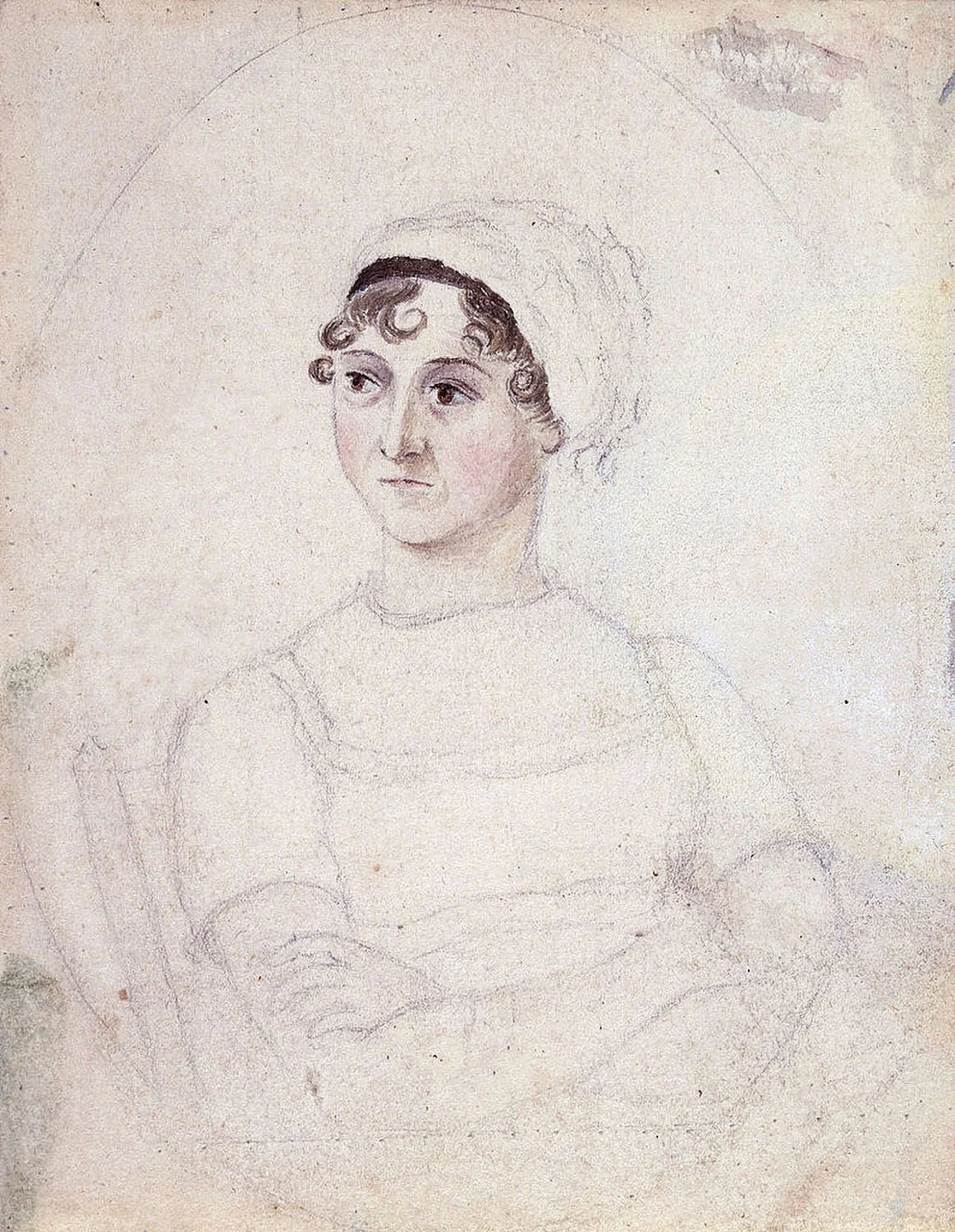
Jane Austen portrait by Cassandra Austen, Circa 1810, National Portrait Gallery, London
Jane Austen as Musician
A Note from the Author:
In the context of The Mind to Music Project, one may wonder why Jane Austen, the renowned Regency era author, would be included. Most people don’t know that she was a seriously accomplished pianist who regarded her playing as much a form of artistic expression as her writing. In her day, most young women’s ability to play the piano was regarded as a transactional skill in order to attract a husband. It was simply one of an array of social currencies. Austen, however, used her knowledge, love, and respect for the art form to illuminate a character’s inner being. In all her novels, the two art forms are inextricably bound, one informing the other.
As printed scores were quite expensive, she was also a prodigious copier of the music of her day. She left volumes of hand copied and notated manuscripts for posterity, each page clear, precise, and beautifully executed. Many contain personal notations and quips typical of Austen’s sly humor and frame of mind.
I have invited Laura Klein, noted Jane Austen scholar, musicologist, and classically trained pianist, to bring her extensive knowledge and expertise to this entry.
Jane Austen - Observation and Musical Biography
by Laura Klein, Austen scholar, musicologist, and pianist
It is a truth universally acknowledged that an accomplished woman in possession of a musical skill must be in want of repertoire. The manifestation of accomplishment is exemplified across Jane Austen’s literary works. It is through an intimate knowledge of the social and musical world in which she lived that gave her mastery of the subject.
Despite the passing of 250 years since her birth in 1775, Austen is still considered one of the world’s leading novelists. She was an accomplished musician, one whose life and work reflect consistent engagement with the music of her time. The knowledge that she acquired of music throughout her lifetime is depicted across diverse social constructs in her novels, where music frequently adds a level of depth to her characters, scenes, landscapes, and relationships. It contributes to character and plot development in a variety of settings from the colorful village of Highbury sixteen miles outside of London to Barton Cottage in the remote countryside of Devonshire.
Austen herself was a committed pianist, evident through her letters and her recorded musical habits. She took lessons through much of her childhood and young adult life. This, in addition to the music collected and played by other Austen women, gave her access to much of the music being printed and performed in London. She painstakinglycopied much of her music by hand, manuscripts that are recalled by her niece Caroline as “easy to read as print,” so “neatly and correctly” were they copied (My Aunt Jane, a Memoir – 1867 by Caroline Austen; Jane Austen Society, 1952). Her personal collection reveals much about her taste in music, her training, and her fastidiousness in writing.